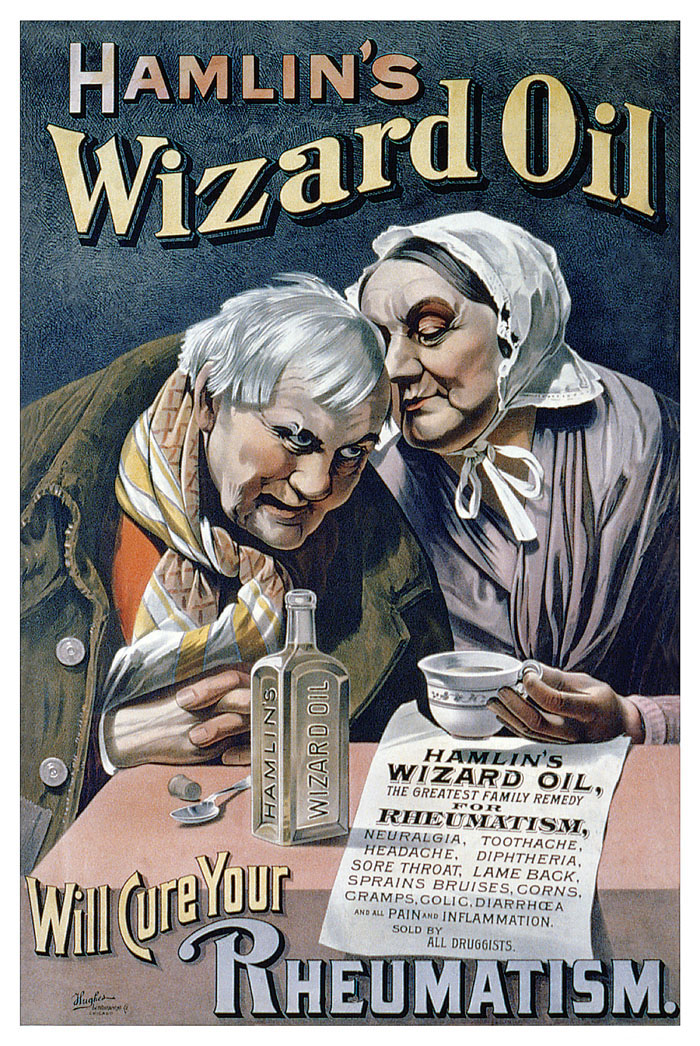
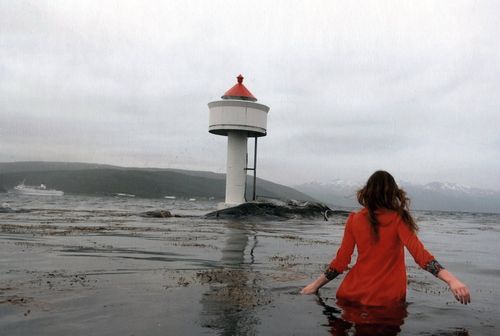
Thought you might take a look at these photos in case you needed some inspiration for your story. Using them is purely optional, but if you do use one, please let me know and I’ll include it with your story when I post them. If you don’t use one of these and would like to have your tale illustrated, let me know or send me an image.
On character creation
(Based on Chuck Wendig’s Nov., 2013, blog)
THE CHARACTER LOGLINE:
Your assignment: Write a logline (aka “elevator pitch”) for two of your main characters. A logline is the one-liner that sums up a character and his/her role in a story. Keep yours to 140 characters or less. Here are some examples:
— Three Little Pigs: “The Big Bad Wolf, an aging loner with an insatiable taste for pork, seeks survival in the form of three pigs living nearby.” (122 characters)
— Star Wars: “Han Solo is a devil-may-care space jock with a hot rocket ship and too many enemies, who falls in with a princess and a wannabe hero.” (133 chars)
— Gone With the Wind: “Scarlett O’hara is a pampered Southern belle whose goals in life suddenly change from finding a proper husband to surviving the Civil War.” (138 chars)
If you’re struggling with your own characters, try doing loglines for well-known players in existing books and movies.
Here’s what’s involved:
A PROBLEM:
The character must have a problem. The problem is why the character exists–it helps generate plot(s). Figure out what the problem is and spell it out as briefly as you can. If you’ve already included it in your logline, you’re ahead of the game.
Think of anything that stands in the way of the character reaching her goal; it could be almost anything: “Can’t find a date;” “Pursued by a soul-eating monster lately escaped from Hades;” “Deals in used souls, but has lost her own;” “Searches for the perfect symphony, but is losing her hearing.”
Consider poor, brilliant Walter O’Brien from CBS tv’s “Scorpion.” His problem isn’t the bad guys he encounters; it’s his inability to interact with “normal” people, primarily his potential love interest, Paige. Whatever gets in the way of their presumed eventual connection is mere plot complication. The real driving force for Walter, is his inability to connect with Paige.
In general terms, the problem is the immediate issue–why we’re here, watching this character, right now.
A SOLUTION:
The character must think he has a solution to the problem. (Not you, the writer, rather, it’s coming from the character.) The player must have a potential solution in mind, and it is precisely that which he’ll launch into in the beginning of the tale.
–The gal who can’t find a date may decide her best bet is to rent a permanent booth in the trendiest singles bar in town.
–The character who can’t duck the soul-eater from Hades may opt to join the space program in order to put some serious distance between himself and the boojam.
–The dealer in dead souls may join a Buddhist order to find sanctuary in some remote mountain temple.
–The gal who’s losing her hearing might seek out a faith healer or a witch doctor if she can’t afford traditional medical remedies.
SOME CONFLICT:
All the wonderful, malleable space between a character’s problem and solution is your playground. Have fun with it. Fill it with dragons, armies, space ships, or a seemingly endless stretch of nothing. It can harbor pitfalls, dead drops, mistakes, oversights, threats, attempts, triumphs and disasters. It’s the land of the Try/Fail, the great and glorious Middle.
You could find this section ridiculously easy to populate. Story stuff could spew out of you as the by-product of the Problem/Solution line up. Walter can’t bring himself to ask Paige out on a date, but when she’s threatened by something that happens as a result of a Scorpion project, Walter will always be the one to risk himself to save her. But what if the Problem/Solution combination fails to provide the sort of conflict needed for a specific genre? Then it’s time to add external conflict.
In “Scorpion,” it comes as a result of the new challenge the team faces in each episode. In the case of the Big, Bad Wolf, the conflict appears in the guise of a pig with some engineering chops–a brick-layin’ porker of all things.
In “Star Wars,” Luke Skywalker dreams of becoming a mystical Jedi warrior, but his tutor is a little green guy with big ears and annoying speech mannerisms. There wouldn’t have been much movie if all Luke had to do was buy a copy of “Jedi Warriorhood for Dummies.”
The great thing about external conflicts is that they provide endless opportunities to develop the character and his/her abilities and/or shortcomings. Walter uses his stratospheric IQ to turn household objects into defensive weaponry. His mind is his principle asset, and the external conflict allows us to see it in action.
LIMITATIONS:
A limitation is generally internal — meaning, it’s something within the character that exists as part of their nature. This limitation hobbles them in some way, altering their problem/solution dichotomy (which we could ostensibly call “the mission”).
Consider Walter from “Scorpion.” His limitation is an inability to deal with “normal” people. This causes problems, of course, but it also allows him to focus his considerable brain power without concerning himself with what other people think. (Although, usually at Paige’s request, he will try to figure out a more acceptable means of sharing his genius.)
Limitations are traits of the character’s that get in her way — they might be flaws or frailties but they can just as easily be positive traits that make trouble for the character and the plot.
COMPLICATIONS:
Complications tend to be external — they are entanglements outside the character that complicate their lives. These can be more character-based or more plot-based depending on which aspect of the story you’re working.
Walter O’Brien has a savior complex. He doesn’t see himself as a cowboy, but when something catastrophic is about to happen–typically the climax of every show–Walter pushes everyone else aside and takes on the most dangerous role. Yes, he’s a super genius, but he’s also part super hero.
And of course the rub is, a character’s limitations and complications are also the things that may help them succeed in their mission even while still causing them grave disorder.
A GREAT FEAR:
Short but sweet: what does the character fear most? Death. Love. Disease. Losing one’s best friend. Bees. Toddlers. Whatever. Identify the character’s fear — meaning, the thing they most don’t want to encounter or see happen — because you’re the storyteller, and you’re cruel, and now you have this Awful Thing in your pocket. And whenever you want, you can bring the Awful Thing out and harangue the character with it to see which way she jumps.
PHYSICAL DESCRIPTION:
Description for characters is overrated. Just a little is plenty, in most cases. To see if you’re in the ballpark describing your players, try this:
Write a description. Keep it to 100 words or less. (Look at what you did with the 140-character limit for the logline!) Imagine the impression someone would have when first encountering your character. If asked later, how would you character be described? Gangly school-age scarecrow with a flair for fashion? Frumpy, middle-aged matron racing toward senility? Svelte sophisticate whose looks are destroyed by her impenetrable Brooklyn accent?
A short, sharp shock of character description. Remember: writers are best describing things that deviate from the norm and violate our expectations. Find the things that make the character visually unique, interesting, odd, curious — different. Stick with those.
THE TEST DRIVE:
The character’s voice and behavior may still be foreign to you at this point — conjuring details and entanglements won’t let you crawl into their skin and drive them like a go-kart. But, like a go-cart, you can take ‘em for a test drive. Best of all, you don’t even have to climb into one of those nasty little miniature race cars!
Write a flash fiction piece with your new player in the starring role. Drive him around. Ding him up. Challenge him! Force him to talk to other characters: an obstinate cab driver, a belligerent cop, almost any teenager. Give him a new problem or one related to the character explicitly.
Let ‘em speak. Let ‘em act. See what they do when you get behind the wheel. Inhabit the character.
The bonus is that you may come away with new material you want to use in a longer work.
NOW, GO REWRITE THE LOGLINE:
When you’ve done all these things, there’s a high probability your character has changed in some profound way. So, go back and rewrite the original logline. Sharpen it ‘til it sparkles like the blade on a carving knife.
And when it’s all said and done, you should have a vastly better grip on your character. You know what makes him tick and why.
–Josh (thank you, Chuck Wendig!)
Welcome to the Blurb-iverse!
Here they are! And thanks to all of you who submitted blurbs. I didn’t want this to feel too much like a contest, but it might be instructive to get some feedback on which of these blurbs is most likely to snare a reader’s interest. And, since none of these books is in production — yet — let’s see how everyone feels about them.
So, please read over all the blurbs and pick out the three that most interest you as a potential reader. There’s no need to do more than that, just pick out three and send me your choices in an email by Sunday evening, April 10th. I’ll post the results before class.
Thank you, and enjoy!
–Josh
Every Last Stitch
Every Last Stitch is the story of two sisters, Martha and Lavender, who clear out their mother’s house after her death and stumble on her deepest, darkest secret. They also learn a lot about themselves as their lives take surprising turns. Will Lavender’s stalker force her to grow up at last? Can Martha’s marriage survive the deceptions that result when she tries to rescue Lavender? And then there’s the old baby quilt found in a trunk in the attic, with a threaded needle still stuck in one of the squares. Who was working on that square, and why did she leave it unfinished? By the last chapter, every last stitch is revealed.
Mrs. Entwhistle
Mrs. Entwhistle takes no guff. She figures she’s old enough and tough enough to speak her mind. Whether she’s being forced into the witness protection program, innocently consuming a pot-laced brownie, or writing an advice column, Mrs. Entwhistle experiences life with a clear eye and tart tongue. In this collection of short stories, you’ll get to know Mrs. E., her old dog, Roger, best friend, Maxine, and bossy offspring, Diane and Tommy. Come and sit on her front porch for a spell, and have a glass of her (not too sweet) lemonade. She’ll let you know when it’s time for you to go home.
Untitled #1
When thirty-eight-year-old Nadja married the wealthy, sixty-three-year-old American, twelve years ago, and her dream of a raising a family never materialized, she returned to Romania for a month-long visit and hooked up with a former boyfriend. Now in the last trimester of her pregnancy, Nadja has less than three months to eliminate her husband, if she hopes to retain her financial status and obtain a Green Card for the baby’s father.
Born a Rebel
Felicia Potter, after being born into a family who did not need another child, learned early on she would never be her mother’s little angel, and that some people must suffer consequences in order to get attention.
Felicia deceives, embarrasses, hurts and destroys lives of people who love her. She loses almost everyone, with the exception of Alexandria, the sister she blames entirely for her miserable life.
When Felicia faces a life threatening challenge she struggles to accept Alexandria’s willingness to help her, and how to ask her for forgiveness.
Abby’s Choice
When young physician, Dr. Abigail Lawrence, unmarried and pregnant, flees her hometown, she moves to a small community in Colorado. Now, after the betrayal of both her father and fiancé, she does not trust the three men who are courting her. Can she overcome her distrust and fall in love? If so, whom will she choose?
Lessons Mama Taught Us
When author Joan, number five of six, decides to solicit her siblings about lessons Mama taught them, a wealth of wisdom is uncovered. Now, adding her own lessons to the mix, Joan pulls together a tool all mothers can learn from.
Untitled #2
When glamorous and worldly baby boomer Bess goes to the car dealership to replace her fifteen year old clunker, she plows through the showroom glass window, wiping out three high end automobiles. She realizes her only opportunity to achieve her goal is to entice Davis, the dreamy youthful car salesman, to give her personalized instruction on new car technology. Now, will Davis step up to the challenge, and will Bess drive home with her dream car?
Untitled #3
When clinical social worker, Sonya, suffers a breakdown in 2008 while caring for her husband whose brain is riddled with psychosis and Alzheimer’s, she is diagnosed with Post-Traumatic Stress Disorder (PTSD). Now, struggling for peace, Sonya must confront her demons to release the grip that her turbulent past has imposed upon her. Bruised and broken, she courageously puts the ragged pieces of her life together — tougher, healthier and happier than ever before.
White Out
When Joy came home to Blood Mountain, she never expected to be thrust into the middle of a legend. Now, with her uncle’s help, Joy will face her fear and confirm there is a Big Foot on Blood Mountain or become the laughing stock of the journalistic world.
Untitled #4
Mary Ann Woods feels her life is over. Her world has come crashing down around her with the death of her husband and baby brother, Jeff. She is the last remaining member of her family, and she is returning to her family home to dispose of it. Alienated from God, she fails to see that He has a plan for her life.
Untitled #5
While Prince Pepe tried to find a wife for most of the year, he has not found one who is truly a princess. He has only one month left to find and approve a princess who will marry him.
But there is one caveat: if she doesn’t pass a simple test, he will never be king.
Split Asunder
When recently-divorced Janet was offered a receptionist job by her own divorce lawyer, it was an answer to at least half her prayers — after all, her resume for the last 15 years was limited to baking cookies and making sure everyone had clean socks and underwear. After three months on the job, however, she was wondering if the paycheck was worth the crashing boredom of an law office — like marriage and good-looking men, sometimes things aren’t as bright and shiny as they first appear.
That was before the Daltons tromped into the foyer, all 18 of them, and all demanding a divorce. Just one, that’d be enough. Suddenly Janet was discovering that perhaps those skills herding headstrong children and lying husbands could still be useful.
Because this might wind up being one for the books. The law books.
Welcome to ELM’s Independent Publishing Class
I’m working on establishing a separate Indie Pub website, but it’s not ready for prime time, yet. So, for now, I’m just going to borrow the site I use for my memoir writing classes. Hope you don’t mind.
And so, without dithering further, here is:
A Brief History of Independent Publishing
There are basically two formats for publishing one’s work these days: ink on paper and digital. Anyone can assemble pages–done by hand like Dark Age monks, cranked through a mimeograph machine, or printed on the $99 printer in your basement. Staple them together and you have a book.
A slightly more elegant product can be assembled at the local office supply store. But the latest innovation for do-it-yourself publishers is “print on demand” or POD books. Digital books are cheaper and easier to produce, but much of the process is the same as for POD books.
Nowadays, the biggest obstacle to independent publishing is creating something worth printing. Anyone who’s spent time browsing Amazon for new books has seen examples of both good and bad work. In fact, much of the reading public still thinks that an indie imprint automatically means poor quality. The Big Six publishers want everyone to think that, and indie publishers who fail to make their work look professional only add to the misconception.
Not long ago, the only way someone could self-publish a book was to use a so-called vanity press. These outfits would accept anything from anyone, and for the right price, usually $2,000 to $5,000, would print several hundred hardback copies and ship them to the author’s address. These usually filled up basements, garages and storage sheds until someone grew weary and had them hauled off to a landfill.
There were virtually no markets outside of what the author could peddle from the trunk of a car. That has changed. Drastically. The biggest problem with self-published work–then AND now–is that many indie authors put in too little time and energy to create something that looks and reads like the product of a big name publisher. Because indies don’t have, or can’t afford, editors, copy-editors, graphic designers and marketers, their books often look homemade.
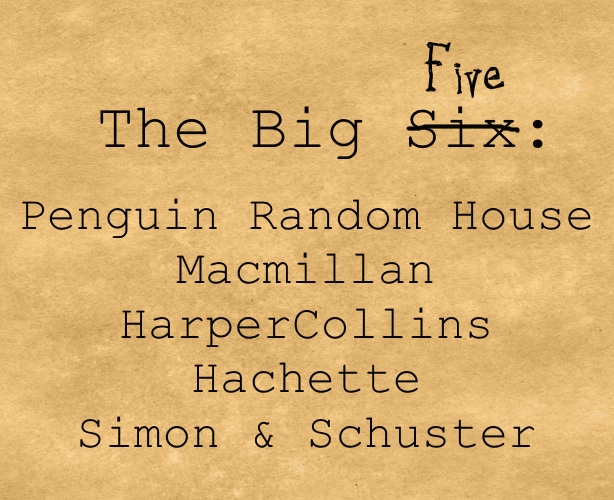
With effort, however, indie books can look and read just as good as anything from Simon and Schuster, HarperCollins, Random House, Macmillan, The Penguin Group, or Hachette. (Only two of The Big Six are US companies, by the way: Simon and Schuster, and HarperCollins. Of the others, two are German, one is British, and one is French.)
Simon and Schuster was established in 1924 in New York City by Richard Simon and Max Schuster. It was one of many stand-alone publishing houses. CBS Corporation now owns the name and publishes over two thousand titles a year. Those books appear under 35 different “imprints” which most people believe are separate and independent publishing companies. They aren’t. At least, not anymore.
HarperCollins isn’t just the outcome of two merged publishers. Harper was founded in New York City almost 200 years ago by James and John Harper, brothers. The company prospered and in 1962 merged with Row, Peterson & Company, becoming Harper & Row Publishers, Inc. The new company acquired the publishing houses of Crowell, and Lippincott and Zondervan and Scott, Foresman. The consolidated Harper company was then bought by Rupert Murdoch’s conglomerate, News Corporation Limited. It later acquired a British publishing house, William Collins & Sons, which was founded in 1819. The distinguished old name Harper was conjoined to the equally distinguished old name Collins to make HarperCollins, a huge subsidiary of News Corp, the world’s largest media company.
Pulp magazines evolved in the late 1800s and changed the way readers got their novels and stories. In the 1930s and 40s, mass market paperbacks changed the distribution of novels and stories to readers again. Electronic books are merely the most recent iteration of the cycle starting around 2009. Over and over, a new way to distribute reading material supplants the old method. Each time, pricey books find a less-expensive way into the hands of readers. It started with Johannes Gutenberg whose printing press put countless transcriptionists out of work in the 1400s. Pulps revamped the system in 1895, and paperbacks did it in 1950. Now, sixty-five years later, it’s happening again.
Amazon, like it or not, owns very little of the market compared to the old American News Company. It controlled virtually all the magazines, comics, and most book distribution in America in the first half of the 20th century. Then, in 1957, it went broke.
In 1940, about half of all novels published were only published in the pulps. At the height of the mass market paperbacks, around 2005, about half of all novels published were only published as mass market paperbacks. It’s a safe bet that will be the number for electronic novels in a decade or so.
Independent publishing is hardly new. Writers published their own books for a long time before the vanity press entered the picture in the 1950s. Before then, publishing your own work or starting your own press was widely accepted. The number of self-published authors was legion. It will be a vastly greater number very soon.
If you look at the books published a hundred years ago, you’ll see almost no sign of today’s publishers. Those you think of as huge now were small press or solo shops–indie presses–50 or 100 years ago. The indies grew up to replace the old, slow legacy publishers of that day. And that’s what is happening now.
–Josh
PS: This was written in 2014. Since then the Big Six have become the Big Five.